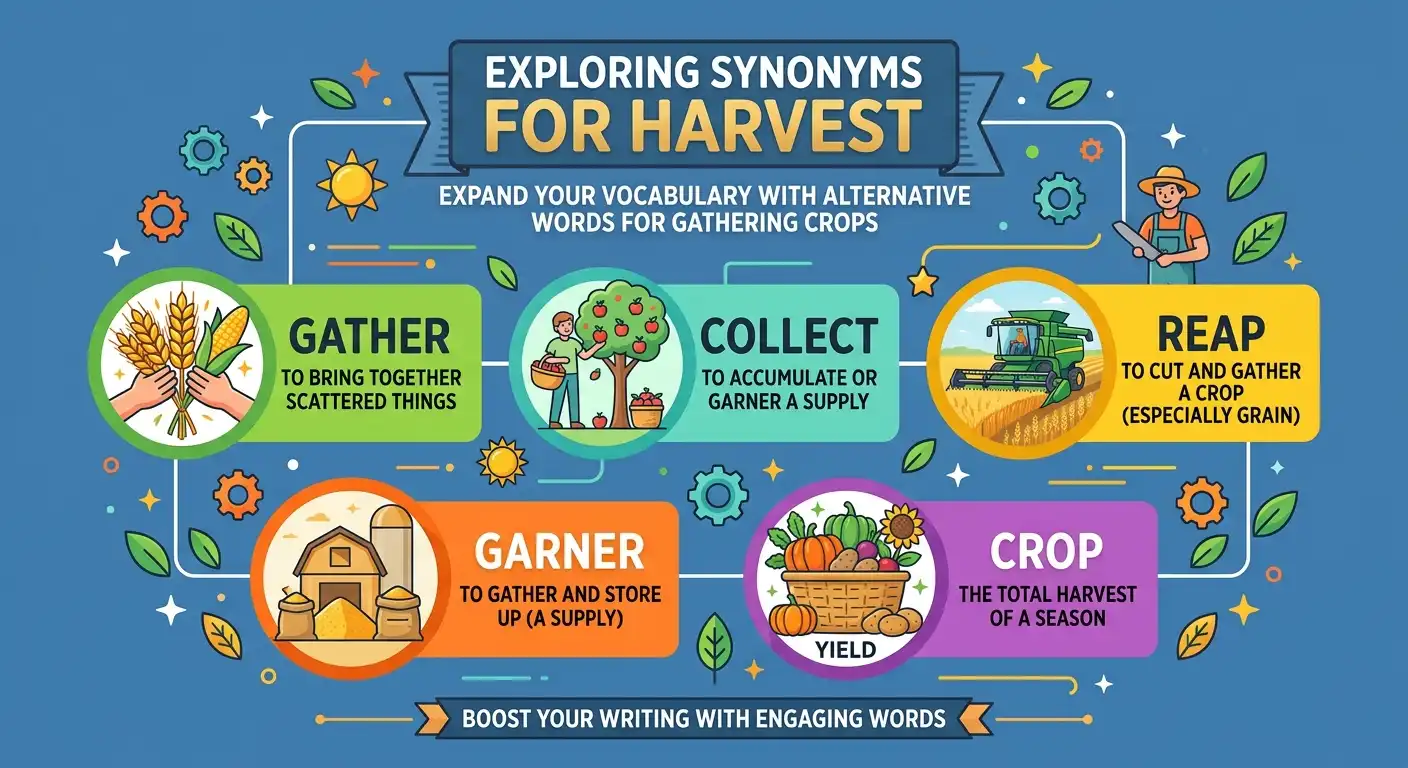
Finding the right synonyms for harvest can transform your writing from ordinary to extraordinary. A harvest is the act of gathering crops or the collection of a product, serving as the ultimate harvest for farmers, creators, and thinkers alike who wish to express abundance and reward.
Imagine standing in a golden autumn field, watching rows of ripe wheat swaying gently in the crisp morning breeze. Every single farmer knows that a successful harvest is the direct result of months of hard work, patience, and careful planning.
In simple words, a harvest means gathering food or results when they are ready.
This word is exceptionally useful for students writing essays about agriculture, bloggers crafting seasonal posts, content writers optimizing articles, and daily English users looking for precise vocabulary.
“Agriculture is our wisest pursuit, because it will in the end contribute most to real wealth, good morals, and happiness.” — Thomas Jefferson
“The art of storytelling is like a rich harvest waiting to be reaped by curious minds.” — Anonymous
Connotative Meaning of Harvest
- Abundance and Reward: Symbolizes the fruitfulness of hard work and successful outcomes.
- Timing and Seasonality: Reminds us of autumn, cycles, and natural readiness.
- Effort and Cultivation: Implies that rewards require prior labor and dedication.
Etymology of Harvest
- Derived from the Old English word hærfest, meaning “autumn” or “the time of gathering crops.”
- Rooted in the Proto-Germanic *harbistą, meaning “plucking” or “autumn.”
- Historically linked to the Germanic word for the month of August or September.
Pronunciation of Harvest (US & UK – IPA)
- US Pronunciation: /ˈhɑːr.vɪst/
- UK Pronunciation: /ˈhɑː.vɪst/
Syllables and Affixation Pattern
- Syllables: Har-vest (2 syllables)
- Affixation Pattern: Root word with no standard prefixes; can take suffixes to form derivatives like harvested, harvesting, or harvester.
Prototype Meaning and Categorization
- Core Prototype: The seasonal gathering of grain and fruit from the fields.
- Expanded Category: Any collection, accumulation, or reaping of results, rewards, or data.
| Keyword | Meaning | Usage Type | Context |
| Crop | The cultivated produce of the ground. | Casual / Professional | Agriculture, gardening, and daily life. |
| Yield | To produce or provide a natural or financial return. | Professional | Business, finance, and farming. |
| Reap | To cut or gather a crop or reward. | Literary / Formal | Literature, essays, and speeches. |
| Gather | To bring together or collect things. | Casual | Daily conversations and general writing. |
| Collect | To bring or come together into a group. | Professional | Data collection and organization. |
1. Crop
Pronunciation: US /ˈkrɑːp/ | UK /ˈkrɒp/ Meaning: A crop is a plant that can be grown and harvested extensively for profit or food. Examples:
- The farmer watered his corn crop every single morning.
- Fresh vegetables and fruits make up our local crop.
2. Yield
Pronunciation: US /ˈjiːld/ | UK /ˈjiːld/ Meaning: Yield is the total amount of agricultural produce or financial profit gained. Examples:
- This year’s wheat yield broke all previous records.
- Smart farming techniques can double your crop yield.
3. Reap
Pronunciation: US /riːp/ | UK /riːp/ Meaning: To reap means to gather a crop or collect the rewards of your actions. Examples:
- You will reap what you sow in life.
- Workers gathered in the fields to reap the golden wheat.
4. Gather
Pronunciation: US /ˈɡæð.ər/ | UK /ˈɡæð.ə/ Meaning: To gather means to bring or come together into one place or group. Examples:
- We gather apples from the orchard every autumn.
- Friends like to gather around the warm fireplace.
5. Collect
Pronunciation: US /kəˈlekt/ | UK /kəˈlekt/ Meaning: To collect means to bring together items from various places. Examples:
- The children love to collect colorful autumn leaves.
- Scientists collect data from the forest floor.
6. Pick
Pronunciation: US /pɪk/ | UK /pɪk/ Meaning: To pick means to pluck or select flowers, fruits, or vegetables by hand. Examples:
- She decided to pick fresh strawberries for dessert.
- He likes to pick ripe tomatoes from his garden.
7. Gathered
Pronunciation: US /ˈɡæð.ərd/ | UK /ˈɡæð.əd/ Meaning: Gathered means things or people that have been brought together. Examples:
- The gathered corn filled several large wooden crates.
- All gathered family members shared a delicious meal.
8. Ingathering
Pronunciation: US /ˈɪnˌɡæð.ər.ɪŋ/ | UK /ˈɪnˌɡæð.ər.ɪŋ/ Meaning: Ingathering is the act of gathering crops or people together. Examples:
- The village celebrated an annual autumn ingathering festival.
- Community members joined the seasonal harvest ingathering.
9. Mowing
Pronunciation: US /ˈmoʊ.ɪŋ/ | UK /ˈməʊ.ɪŋ/ Meaning: Mowing is the action of cutting down grass, grain, or crops. Examples:
- Morning dew made early meadow mowing quite refreshing.
- Tractor mowing keeps the massive fields neat and tidy.
10. Plucking
Pronunciation: US /ˈplʌk.ɪŋ/ | UK /ˈplʌk.ɪŋ/ Meaning: Plucking means pulling something out or picking fruit from a plant. Examples:
- Careful fruit plucking prevents damage to tender branches.
- She enjoyed the gentle plucking of sweet grapes.
11. Accumulation
Pronunciation: US /əˌkjuː.mjəˈleɪ.ʃən/ | UK /əˌkjuː.mjʊˈleɪ.ʃn̩/ Meaning: Accumulation is the gradual gathering or increase of objects over time. Examples:
- The accumulation of snow made winter travel difficult.
- Careful savings created a steady wealth accumulation.
12. Amassing
Pronunciation: US /əˈmæs.ɪŋ/ | UK /əˈmæs.ɪŋ/ Meaning: Amassing means gathering together a large number or amount of things. Examples:
- He spent decades amassing a rare book collection.
- Squirrels focus on amassing nuts for the cold winter.
13. Garnering
Pronunciation: US /ˈɡɑːr.nər.ɪŋ/ | UK /ˈɡɑː.nər.ɪŋ/ Meaning: Garnering means gathering or collecting something, such as support or information. Examples:
- The young artist is garnering positive reviews everywhere.
- Volunteers worked hard on garnering food donations.
14. Stockpiling
Pronunciation: US /ˈstɑːkˌpaɪ.lɪŋ/ | UK /ˈstɒkˌpaɪ.lɪŋ/ Meaning: Stockpiling means accumulating a large stock of goods or materials. Examples:
- Citizens started stockpiling canned food before the storm.
- Winter preparation involves stockpiling firewood near the cabin.
15. Hoarding
Pronunciation: US /ˈhɔːr.dɪŋ/ | UK /ˈhɔː.dɪŋ/ Meaning: Hoarding means collecting and hiding away a large supply of items. Examples:
- Excessive hoarding can clutter a small living space.
- Birds avoid unnecessary hoarding of perishable seeds.
16. Acquiring
Pronunciation: US /əˈkwaɪ.ər.ɪŋ/ | UK /əˈkwɑɪ.ər.ɪŋ/ Meaning: Acquiring means buying or obtaining an asset or object for oneself. Examples:
- Acquiring new language skills opens up global career doors.
- The museum focuses on acquiring rare historical artifacts.
17. Obtaining
Pronunciation: US /əbˈteɪ.nɪŋ/ | UK /əbˈteɪ.nɪŋ/ Meaning: Obtaining means getting something through effort, planning, or request. Examples:
- Obtaining a permit takes about two weeks of paperwork.
- She succeeded in obtaining reliable research data.
18. Securing
Pronunciation: US /səˈkjʊr.ɪŋ/ | UK /səˈkjʊə.rɪŋ/ Meaning: Securing means getting hold of something firmly or making it safe. Examples:
- Securing a stable job brought great relief to his family.
- Climbers focused on securing their climbing ropes properly.
19. Produciveness
Pronunciation: US /prəˈduːk.ɪv.nəs/ | UK /prəˈdjuːk.ɪv.nəs/ Meaning: Produciveness is the quality of producing a large amount of goods or results. Examples:
- Good soil quality enhances the overall land produciveness.
- Regular breaks can boost workplace creative produciveness.
20. Fruitfulness
Pronunciation: US /ˈfruːt.fʊl.nəs/ | UK /ˈfruːt.fʊl.nəs/ Meaning: Fruitfulness is the state of producing good and plentiful results. Examples:
- Farmers prayed for weather that ensured orchard fruitfulness.
- Hard work led to the great fruitfulness of our project.
21. Bounty
Pronunciation: US /ˈbaʊn.ti/ | UK /ˈbaʊn.ti/ Meaning: Bounty is a generous supply of food, goods, or money. Examples:
- The autumn season brought an incredible harvest bounty.
- Local markets overflowed with a rich natural bounty.
22. Abundance
Pronunciation: US /əˈbʌn.dəns/ | UK /əˈbʌn.dəns/ Meaning: Abundance is a very large quantity of something or great plenty. Examples:
- Rain brought an abundance of green grass to the valley.
- There was an abundance of fresh fruit at the table.
23. Plenty
Pronunciation: US /ˈplen.ti/ | UK /ˈplen.ti/ Meaning: Plenty means a full supply or more than enough of something. Examples:
- We have plenty of warm coats for the winter months.
- Sunshine and water ensure plenty of vegetables grow.
24. Copiousness
Pronunciation: US /ˈkoʊ.pi.əs.nəs/ | UK /ˈkəʊ.pi.əs.nəs/ Meaning: Copiousness is the state of being abundant or existing in large quantities. Examples:
- The copiousness of information surprised the research team.
- Copiousness of rain saved the struggling summer crops.
25. Generosity
Pronunciation: US /ˌdʒen.əˈrɑː.sə.ti/ | UK /ˌdʒen.əˈrɒ.sə.ti/ Meaning: Generosity is the quality of being kind and sharing things freely. Examples:
- Their kindness and generosity touched everyone in town.
- The community thanked local donors for their generosity.
26. Profusion
Pronunciation: US /prəˈfjuː.ʒən/ | UK /prəˈfjuː.ʒn̩/ Meaning: Profusion is an abundance or large quantity of something. Examples:
- Wildflowers grew in profusion across the sunny meadow.
- The artist used a profusion of bright colors in paintings.
27. Output
Pronunciation: US /ˈaʊt.pʊt/ | UK /ˈaʊt.pʊt/ Meaning: Output is the amount of something produced by a person, machine, or industry. Examples:
- Factory output increased steadily over the past three months.
- Daily writing output helps authors finish novels faster.
28. Return
Pronunciation: US /rɪˈtɜːrn/ | UK /rɪˈtɜːn/ Meaning: A return is a profit or benefit gained from an investment or effort. Examples:
- Stock market investments provided a solid financial return.
- Hard work always delivers a positive life return.
29. Result
Pronunciation: US /rɪˈzʌlt/ | UK /rɪˈzʌlt/ Meaning: A result is something that happens as a consequence of an action. Examples:
- Studying hard is the direct result of passing exams.
- The experiment result surprised all the chemistry students.
30. Outcome
Pronunciation: US /ˈaʊt.kʌm/ | UK /ˈaʊt.kʌm/ Meaning: An outcome is the final result of an activity, meeting, or process. Examples:
- We waited anxiously for the final election outcome.
- Good planning ensures a positive project outcome.
31. Consequence
Pronunciation: US /ˈkɑːn.sə.kwens/ | UK /ˈkɒn.sɪ.kwəns/ Meaning: A consequence is a result or effect of an action or condition. Examples:
- Every choice we make carries a natural consequence.
- Traffic delays were a consequence of morning rain.
32. Product
Pronunciation: US /ˈprɑː.dʌkt/ | UK /ˈprɒ.dʌkt/ Meaning: A product is an article or substance that is manufactured or grown. Examples:
- Honey is a natural product made by hardworking bees.
- The new tech product hit stores last Friday morning.
33. Fruit
Pronunciation: US /fruːt/ | UK /fruːt/ Meaning: Fruit is the sweet and fleshy product of a tree containing seed. Examples:
- Eating fresh fruit every day promotes good health.
- Apple trees bear delicious fruit in late autumn.
34. Grain
Pronunciation: US /ɡreɪn/ | UK /ɡreɪn/ Meaning: Grain is wheat, corn, or other cultivated cereal crops used as food. Examples:
- Golden grain filled the storage silos before winter.
- Whole grain bread provides excellent daily nutrition.
35. Corn
Pronunciation: US /kɔːrn/ | UK /kɔːn/ Meaning: Corn is a tall plant grown for its large yellow grains on cobs. Examples:
- Farmers harvested sweet corn in the late afternoon sun.
- Tall corn stalks rustled in the gentle summer breeze.
36. Cereal
Pronunciation: US /ˈsɪr.i.əl/ | UK /ˈsɪə.ri.əl/ Meaning: Cereal is any grass cultivated for the edible components of its grain. Examples:
- Cereal crops require plenty of sunlight and regular water.
- Morning breakfast bowls often feature delicious toasted cereal.
37. Produce
Pronunciation: US /ˈprɑː.duːs/ | UK /ˈprɒ.djuːs/ Meaning: Produce is agricultural products, especially fresh fruits and vegetables. Examples:
- Local farmers sell fresh organic produce at the market.
- Clean produce should be washed thoroughly before cooking.
38. Provision
Pronunciation: US /prəˈvɪʒ.ən/ | UK /prəˈvɪʒ.n̩/ Meaning: Provision is the action of providing or supplying something for use. Examples:
- Winter provision planning kept the village safe and warm.
- Food provision camps helped families after the storm.
39. Store
Pronunciation: US /stɔːr/ | UK /stɔː/ Meaning: A store is a quantity or supply of something kept for future use. Examples:
- Squirrels keep a store of nuts hidden in hollow trees.
- Emergency food stores saved the family during the blizzard.
40. Reserve
Pronunciation: US /rɪˈzɜːrv/ | UK /rɪˈzɜːv/ Meaning: A reserve is a supply of a commodity not needed for immediate use. Examples:
- Water reserves remained low after months of dry weather.
- Keeping a financial reserve helps manage unexpected bills.
41. Stock
Pronunciation: US /stɑːk/ | UK /stɒk/ Meaning: Stock is the goods or merchandise kept on hand by a business. Examples:
- Grocery store shelf stock must be checked every evening.
- The warehouse keeps a large stock of winter boots.
42. Hoard
Pronunciation: US /hɔːrd/ | UK /hɔːd/ Meaning: A hoard is a stock or store of money or valued objects kept hidden. Examples:
- Pirates buried a secret treasure hoard on the island.
- The dragon guarded its shining gold hoard in the cave.
43. Accumulation
Pronunciation: US /əˌkjuː.mjəˈleɪ.ʃən/ | UK /əˌkjuː.mjʊˈleɪ.ʃn̩/ Meaning: Accumulation is a mass or quantity of things gathered together. Examples:
- Dust accumulation on old books made him sneeze softly.
- Financial asset accumulation requires patience and discipline.
44. Gathering
Pronunciation: US /ˈɡæð.ər.ɪŋ/ | UK /ˈɡæð.ər.ɪŋ/ Meaning: A gathering is an assembly or meeting of people for a particular purpose. Examples:
- Family members enjoyed a wonderful holiday gathering together.
- Community garden members held a weekend meeting gathering.
45. Collection
Pronunciation: US /kəˈlek.ʃən/ | UK /kəˈlek.ʃn̩/ Meaning: A collection is a group of objects gathered together by interest. Examples:
- He has an amazing stamp collection from around the world.
- Art gallery staff prepared a new modern painting collection.
46. Reaping
Pronunciation: US /ˈriː.pɪŋ/ | UK /ˈriː.pɪŋ/ Meaning: Reaping is the process of cutting or gathering grain or crops. Examples:
- Heavy machinery made field crop reaping much faster today.
- Sunset marked the end of a long day of reaping.
47. Gathering-in
Pronunciation: US /ˈɡæð.ər.ɪŋ ɪn/ | UK /ˈɡæð.ər.ɪŋ ɪn/ Meaning: The gathering-in is the traditional term for bringing crops home. Examples:
- Autumn festivities celebrate the successful crop gathering-in.
- Village elders supervised the vital winter gathering-in process.
48. Collecting
Pronunciation: US /kəˈlek.tɪŋ/ | UK /kəˈlek.tɪŋ/ Meaning: Collecting is the action of bringing multiple items together. Examples:
- Children enjoyed collecting smooth river stones by the shore.
- Data collecting requires high accuracy and attention to detail.
49. Yielding
Pronunciation: US /ˈjiːl.dɪŋ/ | UK /ˈjiːl.dɪŋ/ Meaning: Yielding means producing a natural product, crop, or financial return. Examples:
- High yielding apple trees provided baskets of sweet fruit.
- The fertile soil proved very yielding during dry seasons.
50. Ingathering
Pronunciation: US /ˈɪnˌɡæð.ər.ɪŋ/ | UK /ˈɪnˌɡæð.ər.ɪŋ/ Meaning: Ingathering is the collection of a harvest or bringing things inward. Examples:
- Historic autumn traditions often centered around seasonal ingathering.
- The spiritual ingathering brought peace to the community.
“To everything there is a season, and a time to every purpose under the heaven: a time to be born, and a time to die; a time to plant, and a time to pluck up that which is planted.” — The Bible
Antonyms of Harvest
- Planting
- Sowing
- Neglect
- Loss
- Waste
- Depletion
Frequently Asked Questions (FAQ)
What is the basic meaning of harvest?
A harvest is the process of gathering ripe crops from the fields or collecting the accumulated results of sustained effort.
Why are synonyms for harvest important?
Using synonyms helps writers avoid repetitive language, adds precise descriptive color, and matches specific contextual tones like agriculture, finance, or literature.
How does harvest differ from crop?
A crop is the physical plant grown for use, while a harvest refers to the actual action or season of gathering that crop.
Can harvest be used outside of farming?
Yes, you can harvest data, ideas, or rewards, meaning you collect the beneficial outcomes of your work.
What is a good literary synonym for harvest?
The word reap is widely considered one of the best and most evocative literary synonyms for harvest.
Conclusion
Mastering synonyms for harvest is a brilliant way to elevate your writing, blogging, speaking, and overall communication skills. When you expand your active vocabulary, you unlock the power to paint vivid pictures in the minds of your readers and listeners. Whether you are drafting professional reports, creative essays, or casual daily conversations, choosing the right word makes your message shine with clarity and confidence.
We encourage you to practice incorporating these diverse terms into your daily emails, academic essays, and casual conversations. Notice how changing a single word can completely transform the rhythm and impact of your sentences. Keep exploring, keep writing, and watch your expressive abilities grow abundantly.
“Words are seeds that take root in the mind, growing into powerful ideas and inspiring actions.” — John Ruskin
“The true harvest of my daily life is somewhat as intangible and indescribable as the tints of morning or evening.” — Henry David Thoreau

Thomas Walker is a professional English consultant and content strategist with over eleven years of experience working with technology companies, business writers, and content teams who need precise, modern vocabulary guidance (Biography).