
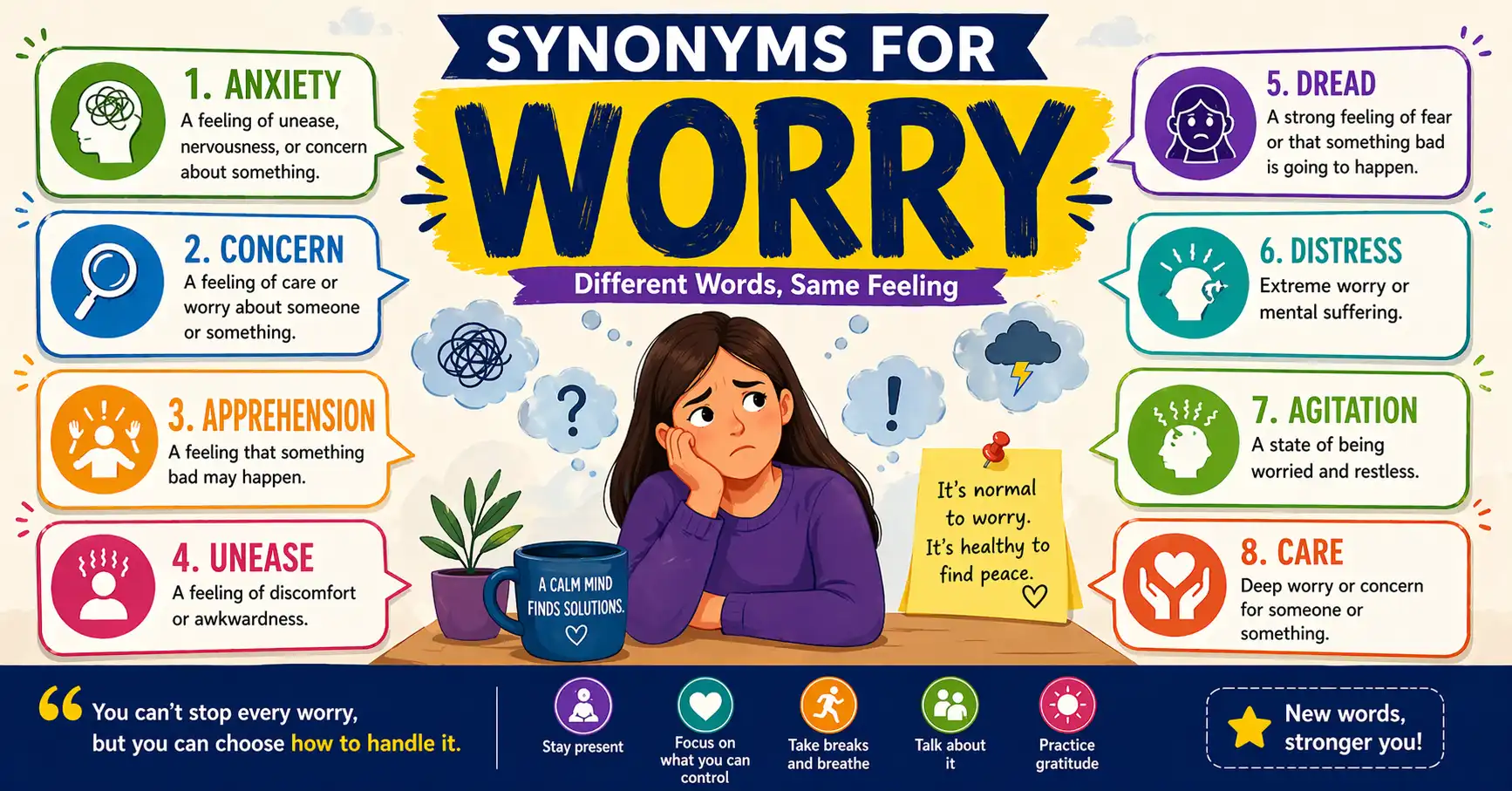
We all know the feeling. You are lying in bed at 2:00 AM, and your mind is racing about tomorrow’s big presentation. Your stomach knots up, and you just cannot relax. This uneasy feeling is what we call a worry. In simple terms, to worry means to think about problems or bad things that might happen in the future. It is a normal human emotion, but using the same word over and over makes your writing dull.
Learning different synonyms for worry is a game-changer. For students, it helps you score higher on essays and bloggers and content writers, it makes your articles more engaging and improves your SEO. For daily English users, it helps you express your exact feelings clearly. Let’s look at the best synonyms for worry to boost your vocabulary today.
1. Anxiety
Meaning: A strong feeling of fear or nervousness about what might happen.
Examples:
- She felt a wave of anxiety before her job interview.
- Yoga helps him reduce his daily anxiety.
2. Concern
Meaning: A feeling of worry about a situation or a person you care about.
Examples:
- The teacher showed great concern for the student’s grades.
- Economic growth is a main concern for the government.
3. Fear
Meaning: A strong, unpleasant feeling caused by being aware of danger or pain.
Examples:
- He had a deep fear of failing the final exam.
- She overcame her fear of dark rooms.
4. Unease
Meaning: A slight feeling of worry, discomfort, or unhappiness.
Examples:
- A look of unease crossed his face when the phone rang.
- The quiet streets gave her a sense of unease.
5. Distress
Meaning: Great pain, anxiety, or sorrow that makes you suffer.
Examples:
- The bad news caused a lot of distress to the family.
- The sinking ship sent out a distress signal for help.
6. Apprehension
Meaning: Feeling nervous or afraid that something bad will happen soon.
Examples:
- He opened the test results with a lot of apprehension.
- She felt some apprehension about moving to a new city.
7. Dread
Meaning: A strong feeling of fear about something that is going to happen.
Examples:
- I dread the thought of waking up early on Sundays.
- A feeling of dread hit him as he walked into the dentist’s office.
8. Panic
Meaning: A sudden, sharp feeling of fear that stops you from thinking clearly.
Examples:
- Do not panic if the power goes out during the storm.
- She felt a sudden panic when she lost her car keys.
9. Nervousness
Meaning: The state of feeling excited, worried, or slightly scared.
Examples:
- His nervousness showed because his hands were shaking.
- She drank some water to calm her nervousness before the speech.
10. Agitation
Meaning: A state of feeling highly annoyed, nervous, or deeply disturbed.
Examples:
- You could hear the agitation in his loud voice.
- She paced up and down the room in total agitation.
11. Care
Meaning: A state of mind filled with burdens, troubles, or serious thoughts.
Examples:
- After a long holiday, he felt free from all care.
- She did not have a single care in the world today.
12. Misgiving
Meaning: A feeling of doubt or worry about the outcome of something.
Examples:
- I have serious misgivings about buying this cheap car.
- She accepted the job offer despite her inner misgivings.
13. Disquiet
Meaning: A feeling of mild anxiety or unease that spoils your peace.
Examples:
- The sudden change in the law caused public disquiet.
- He felt a deep disquiet about the safety of his house.
14. Uneasiness
Meaning: The uncomfortable feeling that something is not right.
Examples:
- There was a strange uneasiness among the team members.
- Her sudden silence filled the room with uneasiness.
15. Perturbation
Meaning: A slight worry or mental disturbance that upsets your calm state.
Examples:
- He showed no perturbation even when he lost the race.
- The rumor caused great perturbation among the villagers.
16. Trouble
Meaning: A state of mental strain, distress, or difficult problems.
Examples:
- Please tell me what is causing you so much trouble.
- His mind was full of trouble after the meeting.
17. Trepidation
Meaning: A feeling of fear or anxiety about something that may happen.
Examples:
- They started their journey up the mountain with trepidation.
- She stepped onto the stage with a bit of trepidation.
18. Consternation
Meaning: A feeling of surprise and anxiety caused by something unexpected.
Examples:
- To the consternation of the players, the game was canceled.
- She stared at the broken window in utter consternation.
19. Fretfulness
Meaning: The state of being easily worried, unhappy, or upset.
Examples:
- The baby’s fretfulness was due to a lack of sleep.
- His constant fretfulness made it hard for him to work.
20. Anguish
Meaning: Extreme suffering, grief, or pain of the mind and body.
Examples:
- He was in deep anguish after losing his best friend.
- The sad movie filled her heart with mental anguish.
21. Hesitation
Meaning: A feeling of doubt or worry that makes you delay an action.
Examples:
- He answered the tough question without any hesitation.
- Her hesitation showed that she was not sure of the plan.
22. Insecurity
Meaning: A feeling of not being safe, confident, or certain.
Examples:
- Financial insecurity makes it hard to plan for the future.
- He spoke softly due to his inner insecurity.
23. Discomfort
Meaning: A feeling of slight pain, worry, or embarrassment.
Examples:
- The stiff leather shoes caused him a lot of discomfort.
- She felt a wave of discomfort during the quiet dinner.
24. Suspense
Meaning: A feeling of excited or anxious uncertainty about what may happen.
Examples:
- The movie keeps the audience in suspense until the end.
- I cannot bear the suspense of waiting for my test scores.
25. Terror
Meaning: A state of extreme, overwhelming fear that paralyzes you.
Examples:
- The loud thunder filled the little dog with terror.
- She watched the horror film with a look of pure terror.
26. Horrors
Meaning: Intense feelings of fear, shock, or deep worry.
Examples:
- The old man still remembers the horrors of the war.
- She woke up shaking from the horrors of her nightmare.
27. Alarm
Meaning: A sudden feeling of fear or worry that danger is near.
Examples:
- The doctor’s serious expression caused us some alarm.
- He looked around in alarm when he heard the glass break.
28. Stress
Meaning: A state of mental tension caused by a difficult situation.
Examples:
- Work stress can lead to bad sleep habits.
- Regular exercise is a great way to relieve stress.
29. Strain
Meaning: Mental pressure or worry caused by too much work or trouble.
Examples:
- The extra work put a lot of strain on the small team.
- You can see the strain of long travel hours on her face.
30. Gloom
Meaning: A feeling of sadness, darkness, or lack of hope.
Examples:
- The rainy weather cast a layer of gloom over the city.
- He lived in a state of deep gloom after his store failed.
31. Pessimism
Meaning: A tendency to see the worst aspect of things or believe the worst.
Examples:
- His pessimism made him think the project would fail.
- She tried to ignore his constant pessimism about life.
32. Heavy Heart
Meaning: A feeling of great sadness, burden, or deep worry.
Examples:
- With a heavy heart, she packed her bags to leave home.
- He gave the bad news to his staff with a heavy heart.
33. Apprehensiveness
Meaning: The quality of being fearful about what the future holds.
Examples:
- Her apprehensiveness kept her from trying new sports.
- There was a general feeling of apprehensiveness before the storm.
34. Qualm
Meaning: An uncomfortable feeling of doubt, worry, or fear about conduct.
Examples:
- He had no qualms about eating the last piece of cake.
- She felt a sudden qualm about lying to her mother.
35. Scruple
Meaning: A feeling of doubt or hesitation with regard to the morality of an action.
Examples:
- The honest salesman had too many scruples to lie to customers.
- She felt a scruple about taking credit for his hard work.
36. Fluster
Meaning: A state of nervous excitement, confusion, or worry.
Examples:
- The unexpected visitors threw her into a total fluster.
- He got into a fluster when he dropped his papers on stage.
37. Suspicion
Meaning: A feeling or thought that something is possible, bad, or true.
Examples:
- I have a strong suspicion that it is going to rain today.
- His strange behavior aroused the suspicion of his friends.
38. Doubt
Meaning: A feeling of uncertainty, lack of conviction, or slight worry.
Examples:
- There is no doubt that she is the best runner in school.
- He had some doubts about the safety of the old bridge.
39. Overthinking
Meaning: Thinking about a situation or a problem way too much for too long.
Examples:
- Overthinking every little detail will only cause you stress.
- She stays awake at night because of her overthinking habits.
40. Restlessness
Meaning: The inability to rest, relax, or remain still due to worry.
Examples:
- His restlessness made him walk around the living room for hours.
- She felt a sense of restlessness as the deadline came closer.
41. Self-Doubt
Meaning: A lack of confidence in yourself and your own abilities.
Examples:
- You must overcome self-doubt to achieve your big dreams.
- Constant self-doubt stopped him from applying for the promotion.
42. Nervosity
Meaning: A state of being highly nervous, excitable, or worried.
Examples:
- Her nervosity increased as her turn to speak approached.
- He drank warm tea to soothe his internal nervosity.
43. Trembling
Meaning: Shaking slightly because you are afraid, worried, or cold.
Examples:
- She spoke with a trembling voice during the emotional meeting.
- His hands were trembling as he opened the secret letter.
44. Panic Attack
Meaning: A sudden period of intense fear or worry that causes physical reactions.
Examples:
- Deep breathing exercises can help stop a sudden panic attack.
- He suffered a brief panic attack before the flight took off.
45. Cold Feet
Meaning: A sudden loss of courage or a surge of worry about doing something.
Examples:
- The singer got cold feet right before walking onto the stage.
- Do not get cold feet now that we have paid for the tickets.
46. Butterflies
Meaning: A fluttery, nervous feeling in your stomach caused by worry or excitement.
Examples:
- I always get butterflies in my stomach before a big game.
- The thought of speaking on camera gave her butterflies.
47. Heartache
Meaning: Deep emotional pain, grief, sorrow, or intense worry.
Examples:
- Losing a pet can cause a lot of genuine heartache.
- Time eventually heals the heartache of a broken relationship.
48. Foreboding
Meaning: A strong feeling that something very bad is going to happen.
Examples:
- The dark clouds filled the captain with a sense of foreboding.
- She shook off her foreboding and walked into the dark forest.
49. Mind-Racing
Meaning: A state where your thoughts move too fast due to extreme worry.
Examples:
- A mind-racing state makes it hard to focus on a single task.
- He practiced meditation to calm his mind-racing thoughts at night.
50. Dismay
Meaning: A feeling of distress, disappointment, or worry caused by something unexpected.
Examples:
- To our utter dismay, the beautiful old tree had been cut down.
- She looked at the messy kitchen with a look of pure dismay.
Conclusion
Learning these 50 synonyms for worry is a fantastic way to boost your writing, blogging, speaking, and everyday communication skills. Instead of repeating the same common words, you can now match your exact feelings with the perfect expression. Start using these fresh terms today in your business emails, school essays, and daily conversations to make your English sound more natural, precise, and professional.

Thomas Walker is a professional English consultant and content strategist with over eleven years of experience working with technology companies, business writers, and content teams who need precise, modern vocabulary guidance (Biography).