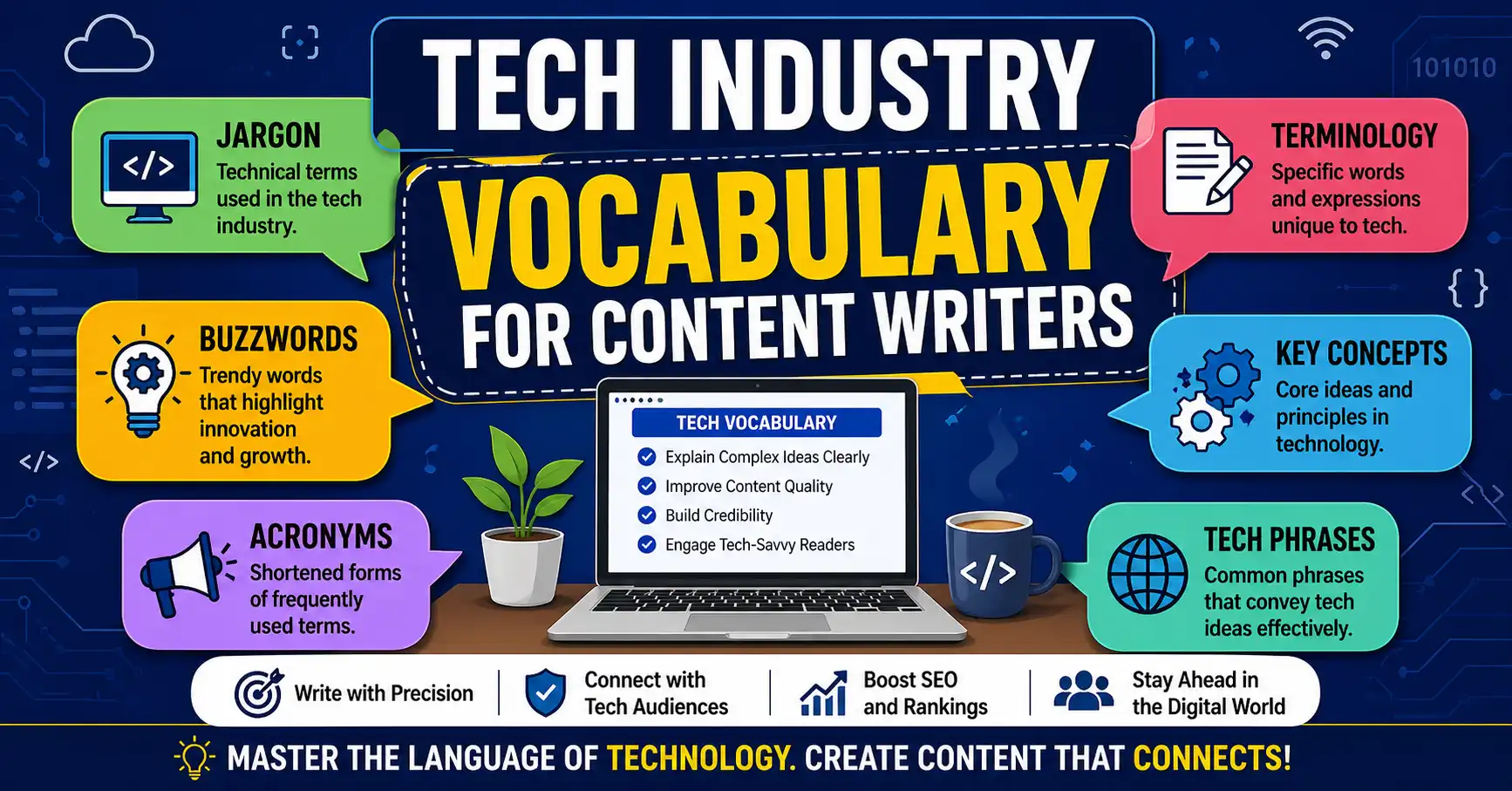
As a content writer in the tech industry, using the right terminology is critical. Whether you’re crafting a blog post, white paper, or user guide, the vocabulary you choose can influence clarity, engagement, and professionalism. But with a rapidly evolving tech landscape, it’s easy to feel overwhelmed by the sheer volume of terms and buzzwords. In this guide, we’ll provide you with a comprehensive list of key tech industry vocabulary every content writer should know in 2026.
By the end of this article, you’ll not only understand the meanings of important tech terms but also gain insight into how to use them effectively, their formal vs informal variations, and common mistakes writers make. Let’s dive in!
Quick Answer:
Tech industry vocabulary for content writers refers to the specialized language used in the technology sector, including terms, jargon, and phrases specific to software, hardware, business, and digital trends. Mastering this vocabulary improves clarity and credibility in writing aimed at tech-savvy audiences.
Main Body Sections
What Does “Tech Industry Vocabulary” Mean?
Tech industry vocabulary consists of the specific terms, phrases, and jargon commonly used in the tech world. This includes terminology related to technology products, business models, trends, and innovations that define the industry. Writers need to master this vocabulary to produce content that is both accurate and relevant to a tech-savvy audience.
Complete Synonyms List
Here are some essential tech terms and their synonyms that are commonly used by content writers:
- Agile – Flexible, Adaptive, Responsive
- Cloud Computing – Cloud Services, Cloud-Based Solutions
- Data Security – Cybersecurity, Information Protection
- Disruptive Technology – Groundbreaking Innovation, Game-Changing Tech
- Machine Learning – AI Training, Smart Algorithms
- Blockchain – Distributed Ledger Technology, Decentralized System
- SaaS (Software as a Service) – Cloud-Based Software, Subscription Software
- IoT (Internet of Things) – Connected Devices, Smart Tech
- Big Data – Massive Data, Data Analytics
- User Experience (UX) – Customer Experience, User-Centered Design
Comparison Table: Key Tech Terms
| Word | Simple Meaning | Best Used When | Avoid When |
| Agile | Flexibility in project management | Describing iterative development cycles | When describing static, fixed processes |
| Blockchain | Secure, decentralized digital records | Talking about cryptocurrency or security | In general business discussions |
| Cloud Computing | Using online resources instead of local servers | Describing on-demand computing solutions | When referring to physical infrastructure |
Formal vs Informal Synonyms
In the tech industry, vocabulary can shift depending on the context—whether you’re speaking with experts or a broader audience. Here’s a look at how certain words can vary:
| Formal | Informal | Best Used When | Avoid When |
| Artificial Intelligence | AI | In professional articles or presentations | In casual conversation without context |
| Cybersecurity | InfoSec | In formal documentation or reports | In blog posts aimed at non-experts |
| Blockchain Technology | Blockchain | In white papers or technical articles | In non-technical media without explanation |
Real Example Sentences
- Agile: “The company adopted an agile methodology, allowing them to iterate faster and respond to user feedback.”
- Cloud Computing: “With cloud computing, businesses can scale their IT resources without large capital investments.”
- Data Security: “Ensuring data security is crucial, especially with sensitive financial information online.”
- Disruptive Technology: “The rise of disruptive technologies is changing the way industries operate.”
- Machine Learning: “Using machine learning, the platform can predict user preferences and optimize content delivery.”
- Blockchain: “The use of blockchain ensures data integrity and transparency in digital transactions.”
- SaaS: “The company offers a SaaS platform that helps businesses streamline customer management.”
- IoT: “The IoT market is rapidly growing, with new devices becoming interconnected every day.”
- Big Data: “Leveraging big data analytics, companies can derive meaningful insights from vast datasets.”
- User Experience: “Improving user experience is a key focus for tech companies developing new apps.”
When to Use vs When NOT to Use
- When to Use: Use these terms when your target audience is familiar with the tech industry or when the content is intended for a professional or specialized reader.
- NOT to Use: Avoid using these terms when writing for a general audience or when explaining concepts that require simpler language.
Common Mistakes Writers Make
- Overuse of Jargon: Writers often use complex terms without considering whether their audience will understand them.
- Incorrect Synonyms: Using a synonym that doesn’t match the context, such as using “machine learning” when referring to simple data analysis.
- Lack of Clarity: Failing to explain industry-specific terms clearly, which can confuse readers.
- Excessive Formality: Using overly technical terms where simpler alternatives could suffice.
Tips and Best Practices
- Know Your Audience: Always tailor your vocabulary to your audience’s level of expertise. For beginners, avoid technical jargon.
- Explain Technical Terms: When introducing new or complex terms, offer a brief explanation to enhance understanding.
- Stay Current: The tech industry evolves quickly, so stay updated with the latest terms and trends to remain relevant.
- Use Visuals: When discussing complex concepts like cloud computing or AI, complement your writing with diagrams or infographics for better clarity.
Frequently Asked Questions
Q: What is the importance of tech industry vocabulary in content writing?
A: Understanding tech industry vocabulary helps content writers communicate complex ideas clearly, enhancing the quality of the writing and ensuring it resonates with a professional audience.
Q: How do I avoid overusing technical terms in content?
A: Use technical terms sparingly and always explain them when first introduced. Tailor your language to match your audience’s level of understanding.
Q: Can I use simple language in tech articles?
A: Yes, using simple language is often more effective, especially when writing for a broad audience. Just ensure accuracy in your explanations.
Q: Are there any synonyms for “disruptive technology”?
A: Yes, synonyms include “groundbreaking innovation” and “game-changing tech,” though these may be more informal.
Q: How can I improve my understanding of tech vocabulary?
A: Stay updated with tech blogs, industry reports, and online courses to expand your vocabulary and understanding of new concepts.
Q: What is the difference between “cloud computing” and “SaaS”?
A: Cloud computing refers to using remote servers for processing and storage, while SaaS specifically refers to software delivered over the internet as a service.
Conclusion
Mastering the tech industry vocabulary for content writers is essential for producing content that is both precise and professional. By understanding the meanings and nuances of key terms, you’ll elevate the clarity and credibility of your writing. Keep practicing and stay updated with the latest trends in the tech world to keep your content relevant and impactful.
You might also want to read our guide on disruptive technology for a deeper dive into how this term is shaping the future of innovation.
Happy writing!

Thomas Walker is a professional English consultant and content strategist with over eleven years of experience working with technology companies, business writers, and content teams who need precise, modern vocabulary guidance (Biography).